
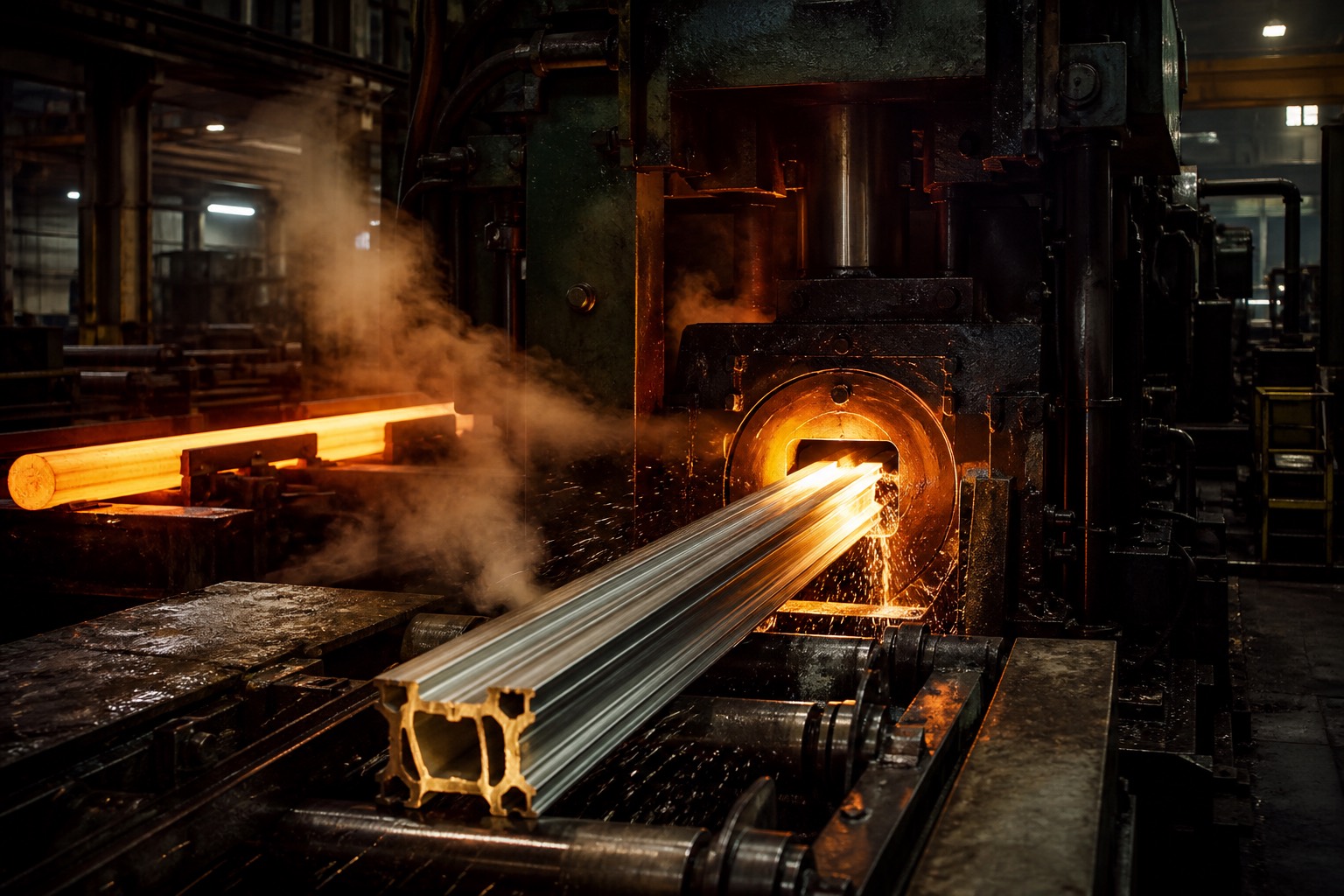
Dies are where geometry meets working capital. New plants often treat tooling as a purchase line. Buyers treat it as proof you can repeat the part. Get that mismatch wrong and you either burn cash on a museum of one-off steel or show up to OEMs looking unserious.
You really have three options, and mixing them is normal. Own the die when the profile sits in your core wedge, volumes justify amortisation, and you want control over revisions and lead time. Share or customer-fund tooling when a large account will underwrite the die against a volume commitment — with ownership and revision rules written down, not waved through on a call. Outsource die making, and sometimes first samples, when you need speed or specialty skill, or when demand is still unproven and locking money in steel is premature.
What drives the choice is rarely philosophy. It is run length and repeat rate, how often the product will revise, whether the buyer will allow drawings into a shared shop, whether the die even fits your press class, and how fiercely billet and receivables are already competing for the same rupees. A beautiful die that does not match the press is scrap with paperwork.
For year one, a workable rule is to own only the handful of profiles that define your brand and utilisation — often the first five to eight. Push customer-funded tooling for large named accounts whose forecasts you believe. Keep sampling outsourced until the commercial case for owning steel is obvious. If sales starts promising that you will cut any die for anyone, you are funding inventory that never earns its keep.
Buyers notice the contract language more than the brochure. Be explicit about who pays for the first die, who pays for revisions, who owns the steel, where it lives, and what happens when the account goes quiet. Ambiguity here becomes margin leakage later, usually in the middle of a heated quality argument.
Die strategy sits inside capability and GTM design: which profiles deserve ownership, which should stay light, and how that map supports the order book. A Diagnostic Sprint with Vulcan is a clean place to lock that before capex commitments and sales promises drift apart.