
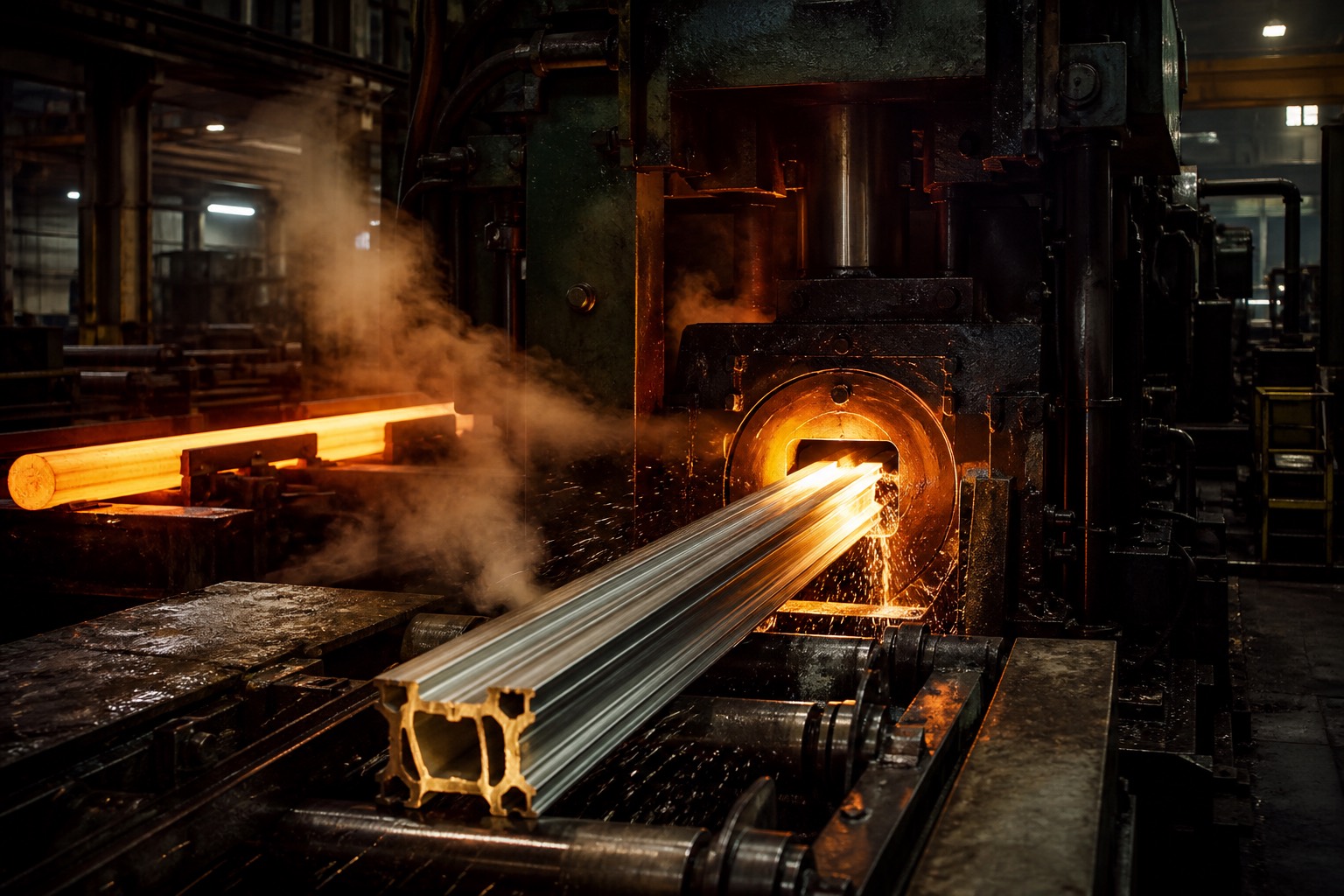
Founders often buy the biggest press they can finance and assume the order book will catch up. In practice it rarely does. Tonnage should chase credible demand, not the other way around — and the conversation has to start with what you can sell, not what looks impressive on a foundation drawing.
Before anyone debates 1,000T versus 1,650T versus something heavier, sit with the first eight to twelve profiles you believe you can move in year one. Get honest about circumscribing circle, wall thickness, alloy family, and whether buyers care about high finish, structural performance, or a clean mill finish that simply arrives on time. Add expected order shape: one-off project work versus monthly repeat. A press that cannot make your wedge is useless. A press that can make everything often sits cold while the team chases random RFQs.
Then translate demand into press hours. Sketch the tonnes per month you can actually sell — not the tonnes you hope for — and put recovery assumptions on the page, because scrap is not a footnote. Look at hours after maintenance, die changes, and the learning curve of a new crew. Ask whether the mix is long runs on a few dies or constant changeovers. When the book is thin and fragmented, a mid-range press with disciplined die change often beats a heavy line waiting for “big” work that never quite materialises.
Bigger tonnage does buy a wider envelope: heavier sections, larger circles, certain jobs a lighter press will refuse. It also raises civil and foundation cost, power, billet working capital, and the utilisation you need to break even. Most dangerously, it tempts the commercial team to fill idle hours with poorly priced work. Buy up only when named demand needs that envelope — an OEM spec, a structural section, a partner who will genuinely load the press.
The practical filter is simple. Lean smaller or mid when year-one demand is named but modest, the mix is many SKUs and short runs, buyers are distributors and fabricators, working capital is tight, and the operating team is still learning. Lean larger when committed volume needs the heavy envelope, campaigns are longer, the balance sheet can fund under-utilisation for a year, and experienced extrusion leadership is already in the room. If you cannot fill that picture with evidence, you are not choosing tonnage — you are guessing.
The usual mistakes are familiar: copying a competitor’s line without copying their order book; sizing for a dream segment before a single qualified account exists; ignoring finishing and packing bottlenecks that cap output below press capability; treating “installed capacity” as a sales argument when buyers care about delivery and fit.
This month, list the profiles and tonnes you can defend with names, not slides. Map them to the minimum press class that can make them well. Stress-test utilisation at forty, sixty, and eighty percent and look at the cash each case burns. Only then open vendor talks on a specific tonnage.
Vulcan’s Diagnostic Sprint is built for this decision: demand first, capability map second, capex third. If you are mid-negotiation on a press and the order book is still fuzzy, pause the PO until the commercial envelope is clear.